

W
Loading…
Loading…
Custom software and automation configurations for remote homes, farms, villas and resorts: a property dashboard, local control logic, device configurations, hub onboarding and a direct-booking service.
Rakhwala is a product-engineering project for properties that are not always attended in person. It brings water, irrigation, energy, lighting, security and stay-related information into a property-specific interface. The portfolio demonstrates the software with simulated data; it does not identify a commissioned customer installation.
A remote property cannot depend on a browser or a permanent internet connection to run its control rules. Owners also need an understandable view of several different systems, while each property has its own module selection and rollout. The architecture separates the local automation hub from the dashboard and remote-access layer.
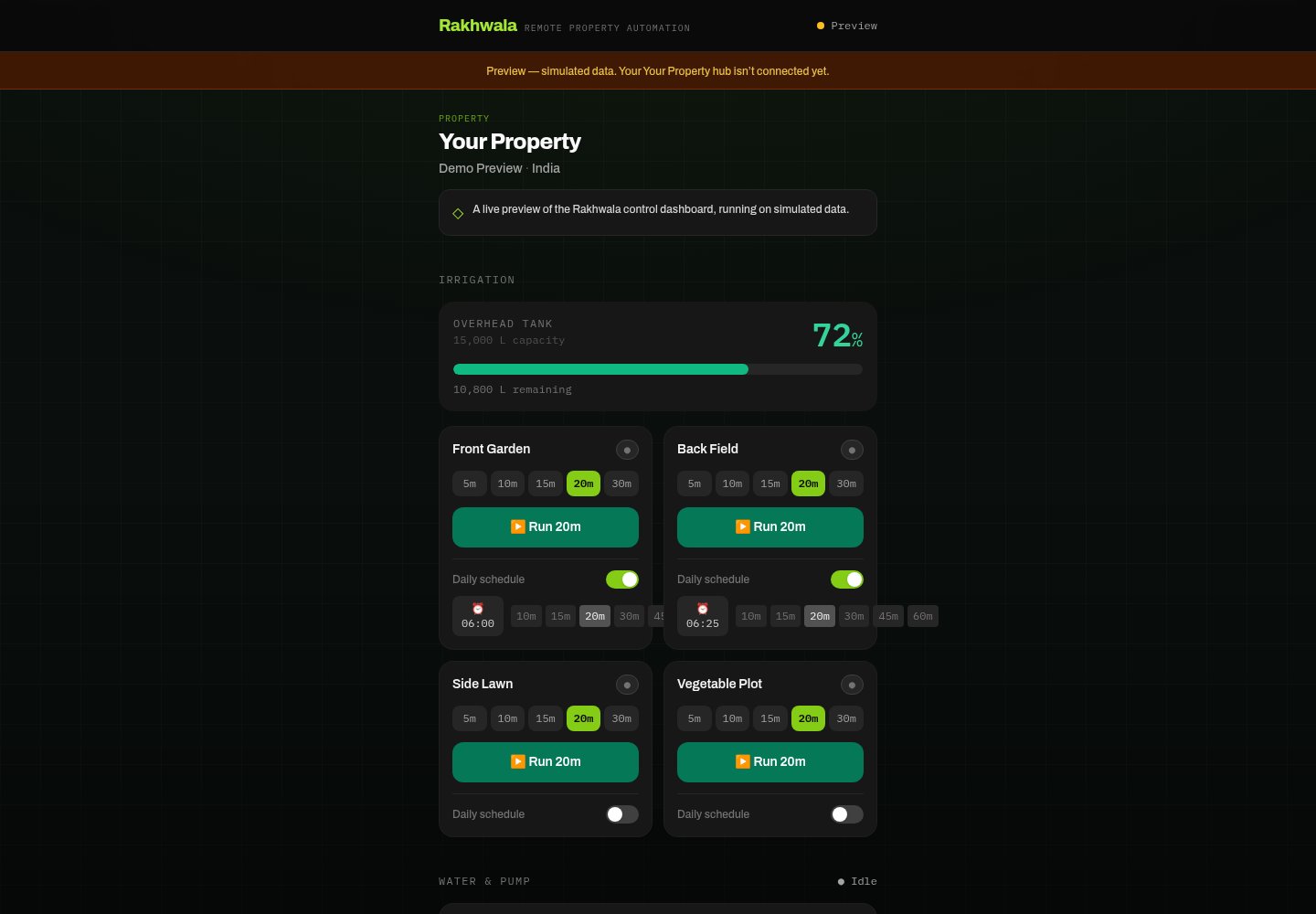
The custom dashboard has separate subsystem panels and property-based module selection. Its Home Assistant client authenticates, loads entity states, subscribes to changes, reconnects and sends service calls. A separate mock adapter allows a demonstration without contacting a real hub.
Owners can understand the system before hardware is connected, while the live-data adapter is kept separate from the UI.
Automation packages run in Home Assistant rather than in the web interface. The water/pump package models tank thresholds, manual starts, runtime limits and a latched dry-run fault; the device configuration includes local pump-cutoff logic. Other packages cover irrigation and property subsystems.
The design keeps operating rules close to the equipment. Physical safety and outage behaviour still require commissioning and field tests.
The provisioning API validates setup data, writes local Home Assistant and ESPHome settings, selects module packages and supports remote-access configuration. Relay scripts and service files provide an installation/deployment path.
The engineering includes how a property is configured and supported, not only what its dashboard looks like.
The booking service implements property information, availability checks, price quotes, pending requests, owner status/settings management and calendar export. Reservation automation packages use calendar entities to model occupied/vacant state and check-in/check-out actions.
Guest-stay administration and property automation have a defined connection; live calendar setup and physical actions remain deployment tasks.
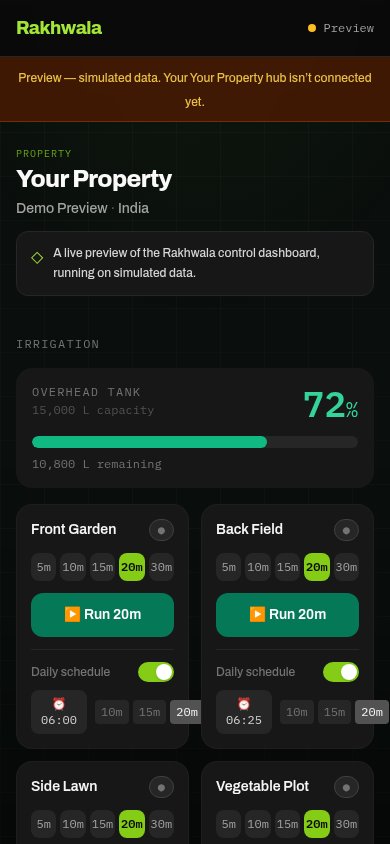
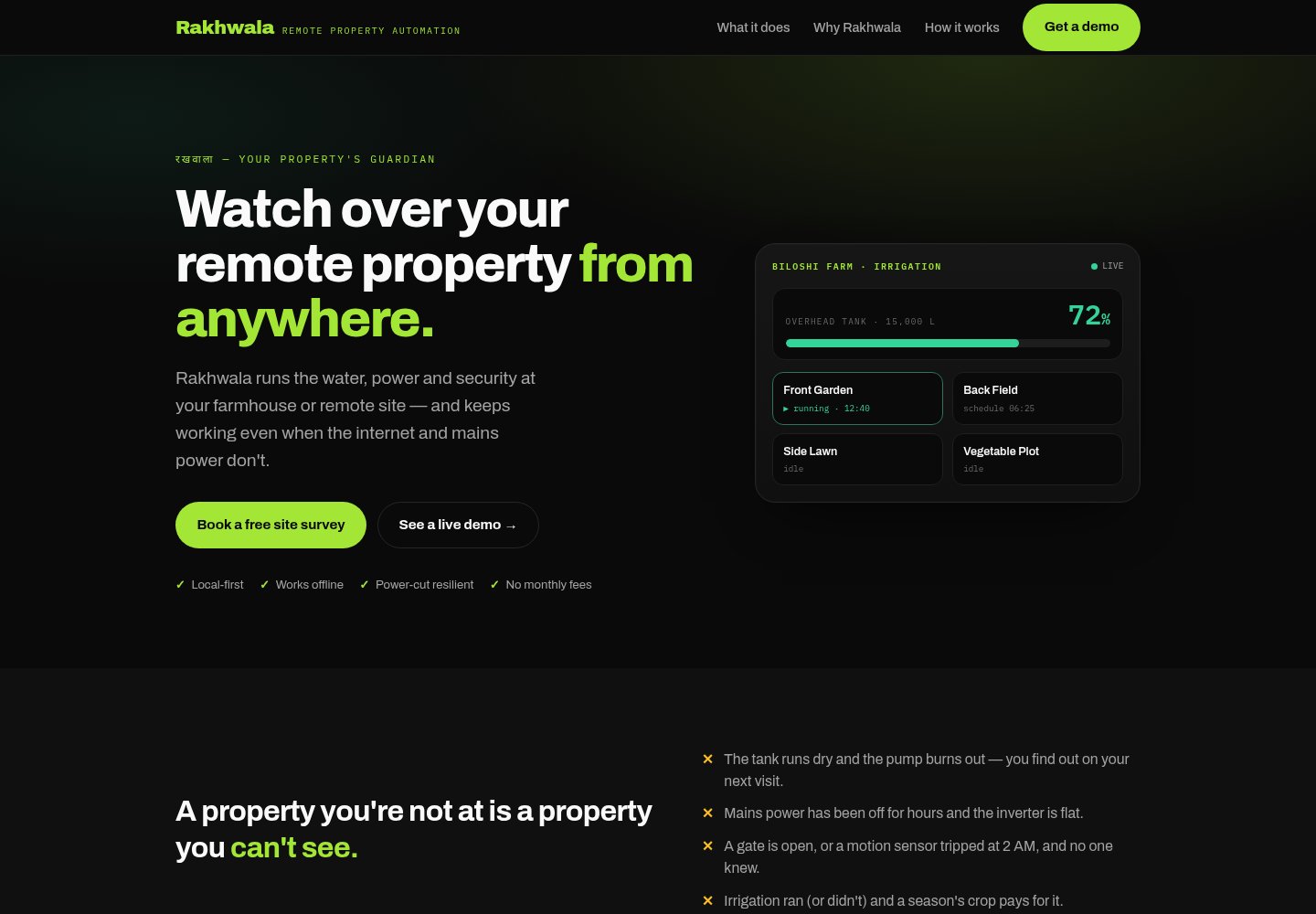
A separate marketing page and a generic dashboard preview communicate the modules and the proposed rollout. The screenshots here are captured locally with simulated data and the generic demo property.
The product can be demonstrated without exposing a customer’s address, access credentials or live sensor readings.
Local-first
Control logic configured on the property hub
Demo-ready
Dashboard runs with simulated entities
Modular
Per-property subsystem selection
Stay workflows
Booking requests and calendar integration code
These are source-verified software capabilities. Hardware commissioning, installed sites, uptime through outages, water/energy savings and safety performance are not claimed as measured results.
Reviewed dashboard and HA protocol code, ESPHome configurations, automation packages, provisioning API and booking service. Screenshots show a local simulated demo and source-site preview. Public marketing/demo URLs returned HTTP 403 during review; no inaccessible live link is published.
The same engineering approach is relevant to an industrial site that needs an understandable monitoring interface around local equipment and operating rules. Device selection, installation and field validation are separate parts of that engagement.
Tell us what you make, who you sell to and where you want to grow. Start with a free review of your current website.